VoltRescue – San Francisco
- Serving San Francisco and the City and County of San Francisco. Mobile only.
- 813-688-1418
- Dispatch answers 24/7
Facts researched Nov 4, 2026. Map pin is the city center, not an office. No storefront here.
Know San Francisco.
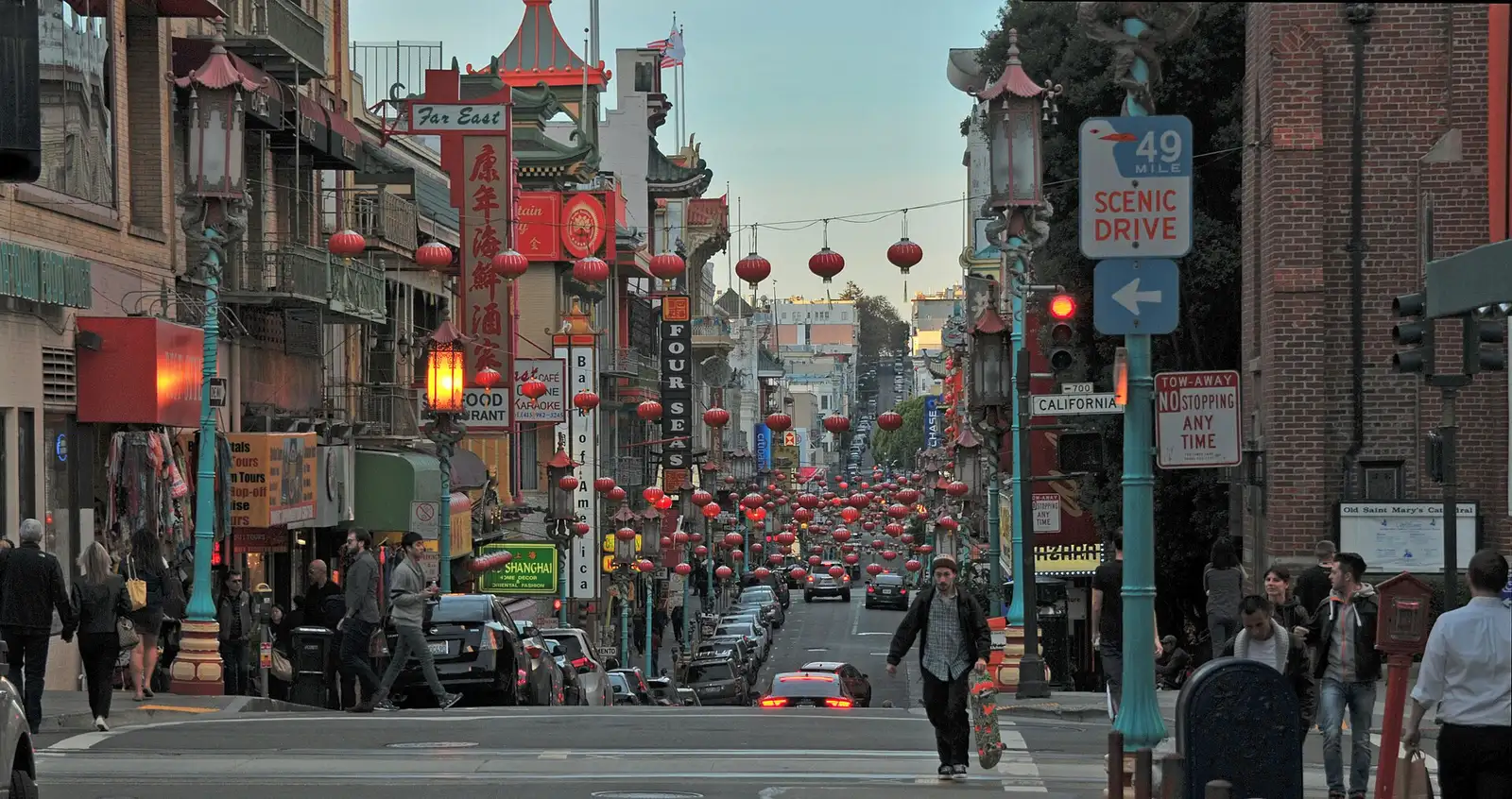
San Francisco is a consolidated city and county, the fourth most populous city in California, with 873,965 residents in the 2020 census and one of the highest densities of any major American city. Its compact footprint sits at the tip of a peninsula, bounded by the Pacific to the west and the bay to the north and east. Driving here is shaped by that geography: famous hills, limited parking, cable car lines on some streets, and only a handful of freeway entrances. We answer calls from Fisherman's Wharf and Pier 39 to SoMa, Mission Bay near Chase Center and Oracle Park, the Mission District, and the neighborhoods out toward the ocean. San Francisco International Airport sits south of the city line,; airport trips start or end inside the city.
San Francisco on Wikipedia- Golden Gate Bridge
- Bay Bridge
- Oracle Park
- Chase Center
- Fisherman's Wharf
- Pier 39
- Mission Bay
- SFO (south of the city)
San Francisco on the record.
- dense coreSecond-densest major city in the US[1]
- coastalWater area is about four times the land area[2]
- Land and water
- 46.9 square miles of land and 185.0 of water inside the limits. Water is roughly four times the land area.[2]
- Density
- The second-densest major city in the US.[1]
- Transit
- Light rail, buses, BART and Caltrain reach nearly every part of the city.[1]
Three ways we help.
Where we meet you in San Francisco.
SoMa and Mission Bay
Ballpark and arena nights fill every garage within walking distance. If you are low after an event, wait for the first wave to clear, then call. We find you faster once streets open up.
The Bay Bridge queue
Once you are on the approach, there is no exit until the bridge ends. If your range is marginal, stay in the city and call us instead of joining the line.
The western neighborhoods
Out toward the ocean, fog and wind cool the pack, and parking is usually on-street. Give us the block and the cross street, and leave your hazards on.
Hilltop streets
Steep blocks make cable setup awkward. If you can roll to a flatter street safely, do it; otherwise turn the wheels to the curb and set the parking brake.
Before you call
Have your plate, model and charge level ready. Say whether the car powers on. Mention kids, pets or heat risk first. If anyone is in danger, call 911 before us.
Range in San Francisco.
Hills and regeneration
Climbing a steep block takes more energy than the flat map distance implies, though descending recovers some of it. With almost no charge left, a climb can be the last thing the car manages. Park on level ground if you can.
Bay Bridge approach
Because I-80 is the only direct road to the East Bay, the approach backs up at peak times. Joining that queue with a low pack and no exit is risky. Charge before you commit to the bridge.
Garages and gates
Many San Francisco cars live in tight residential and commercial garages. Tell us the clearance, the entry method and whether staff can let a technician in. That saves minutes when every minute matters to you.
San Francisco roads we cover.
Starts at the Bay Bridge approach and is the only direct car link to the East Bay. A stall here or in the approach queue is slow to clear.
Connects to I-80 and heads south along the bay toward Silicon Valley; to the north it follows city streets to the Golden Gate Bridge.
Runs south from the city and curves along its southern edge to end just south of the Bay Bridge in SoMa.
Enters from the Golden Gate Bridge and crosses the city as 19th Avenue, a busy arterial with frequent signals.
When a San Francisco charger lets you down.
Fast chargers in San Francisco are scarcer and more expensive per square foot than in the suburbs, and many sit inside garages with entry gates and height limits. When one is broken or blocked, the next option can be across steep blocks and slow signals. If you are below a few miles, do not start a hill climb looking for another station. Find a safe spot and call us with the garage name or cross streets.
San Francisco climate, by the numbers.
San Francisco's climate table shows September as the warmest month, with highs near 70°F, and December and January lows around 47°F. Rain totals about 23 inches, nearly all from October through May, with July almost dry. San Francisco has a mild Mediterranean pattern moderated by cool Pacific currents and the bay, with cool, moist winters and dry summers. Fog and wind through the Golden Gate keep summers cool; October is often warmer than July. Days at or above 80°F are rare, roughly 20 to 25 a year downtown. For EVs, mild temperatures mean little seasonal range loss.
Climate table source| High °F | 58 | 60 | 62 | 63 | 64 | 67 | 66 | 68 | 70 | 70 | 64 | 58 |
|---|---|---|---|---|---|---|---|---|---|---|---|---|
| Low °F | 47 | 48 | 49 | 50 | 51 | 53 | 54 | 56 | 56 | 54 | 51 | 47 |
| Rain in | 4.4 | 4.4 | 3.1 | 1.6 | 0.7 | 0.2 | 0.0 | 0.1 | 0.1 | 0.9 | 2.6 | 4.8 |
Bars span average low to average high, °F. Peak 70.2°, coldest low 46.6°.
Hypothetical, on real roads.
Illustrations only. Not records of real jobs.
Bay Bridge approach in SoMa
Tesla Model 3
Picture a commuter heading for the East Bay at 6 p.m., stuck in the approach queue in SoMa while the pack slipped to zero. In this example, the driver would call once stopped safely, possibly with help from traffic officers. A technician would add enough range to clear the bridge and reach a station on the other side. An illustration, not a real job.
Garage near Oracle Park
Polestar 2
Imagine a fan leaving a game to find a Polestar 2 unresponsive in a nearby garage after sitting all day. A tired 12-volt would be the likely cause. In this scenario, a technician would jump the auxiliary battery and check whether the main pack needed a short top-up too. Hypothetical call, no real record.
Official resources
City contacts
Department addresses and phones not yet verified. Omitted rather than guessed.
- [1] San Francisco · Wikipedia · read Nov 4, 2026
- [2] 2020 Census Gazetteer place file, row "San Francisco city, CA" · U.S. Census Bureau · read Nov 4, 2026
- Local department contacts not verified; omitted.
Know the number before we roll.
Every charge visit adds 25–50 miles of range, enough to reach a station or get home. See full roadside pricing below.
Real reviews only.
Connecting soon.
We will not invent a rating. Once our Google Business Profile is connected, recent reviews from drivers appear here.
Placeholder layout. No ratings or quotes are shown until live data exists.
San Francisco, answered.
01How fast can you reach me near the Bay Bridge?
San Francisco is metro, so we aim for 30–45 minutes. Bridge traffic and hills can lengthen that. You get an honest estimate.
02Do you cover Mission Bay and Fisherman's Wharf?
Yes, and every other neighborhood in the city. Garage locations need a level and entry details.
03How much charge do you deliver?
About 25–50 miles per visit. That covers most crossings and station searches.
04Can you charge a Tesla, Rivian or Lightning?
Yes. We check garage clearance and connector type first.
05Do you offer towing if charging is not enough?
Yes, flatbed through Bay Area partners. $150 base; $10 per mile.